
Master Solutions Blog
Master Solutions has been serving the Naperville area since 1996, providing IT Support such as technical helpdesk support, computer support, and consulting to small and medium-sized businesses.


Small business leadership teams frequently address digital threats by purchasing separate software applications over time to defend different office terminals. This piecemeal strategy generates a fragmented environment where the antivirus app, mail filter, and network barrier do not share event data.
Cybercriminals deliberately exploit these disconnected zones, launching quiet intrusions that easily slide past individual security tools undetected.
0 Comments

As a business owner, you probably manage hundreds of different online accounts. Best practices say you should have a unique password for each one! That's a lot to handle, but it is an essential rule that each and every member of your team needs to follow. A standalone password manager is a super useful tool to help with this… as long as you can get your team’s buy-in.
Let’s work through it together.
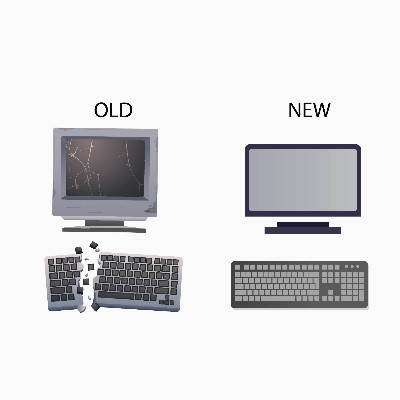
For many small businesses, upgrading IT hardware feels a lot like a trip to the dentist: it gets delayed until the pain becomes completely unbearable. Waiting for devices to die before replacing them leads to the ultimate budget trap—buying an entire fleet of new tech all at once.

Every small business owner wants their technology to be a strategic advantage, but the unfortunate reality is that few actually get there. You might envision a workplace where your apps seamlessly integrate, all data is secured, and your employees can work without IT troubles, but without understanding where you currently sit on the IT maturation spectrum, it’s hard to get there.

Logic might tell us that new and better tools will help us grow, but beware… in practice, adding new applications into a business workflow can often have the opposite impact. Instead of reaching new levels of productivity, your team is waylaid by additional notifications, obstructive updates, and expanding, fragmented work processes. It is, in a word, exhausting.
This mental tiredness is known as tech fatigue, and its impacts permeate your entire business. Let’s talk about how these impacts manifest and what can be done about them.

The pressure to secure a business network is immense, but locking down digital environments too tightly can prevent staff from accessing necessary files and tools. Managing access effectively requires a balance between security and productivity.

Small businesses invest thousands of dollars into sophisticated firewalls, email filters, and software protection to keep hackers out of their networks. However, many of those same organizations leave their physical server closets completely unlocked, or they locate their main network hardware in shared spaces like copy rooms.

Many small business owners view IT expenses as a series of unavoidable, expensive surprises. Under the traditional break-fix model, you only pay a technician when something actively stops working. While this sounds logical on paper, it creates massive financial volatility for your cash flow and completely derails your long-term planning. A major server failure or network crash results in an unexpected, four-figure invoice that disrupts your operations.

When was the last time you consulted your team members about a planned technology change or investment? Never, right? Instead, you look at the metrics, balance the various return on investment figures, and determine whether to invest in a new platform.
However, a mere three months later, your entire team has largely abandoned the new platform and reverted to how things were done before. As frustrating as this situation is, it helps reveal a key issue: You and your team have different perspectives and priorities.
Many technology policies are outdated documents filled with legal prohibitions. Employees often sign these forms during their first day of work and never look at them again. This approach is ineffective because overly restrictive rules lead staff to use unapproved software just to complete their tasks. This behavior creates security risks that are difficult to monitor or manage.

Artificial Intelligence has taken up a reputation as the ultimate productivity booster, but it has also introduced a new layer to the phenomenon known as shadow IT… shadow AI. This occurs when employees use unauthorized, public AI tools to summarize meeting notes, write code, or analyze spreadsheets.
While their intentions are good, these employees (and yes, occasionally business leadership) often unknowingly upload proprietary company information to a public database they have no control over.

Vendor management is one of those corporate terms that sounds intentionally boring. In reality, it’s one of the most powerful ways to reclaim your time.
At its core, it means you have a single point of contact—us—to handle the relationships, the troubleshooting, and the procurement for every tech service you use.

Every day, your business generates a massive amount of data. Your staff sends and receives emails, produces documents, updates customer records, and stores financial information. This data isn’t just a byproduct of your work; it is the fundamental engine that keeps your organization operating.
But here is the reality: data is fragile. It can be lost in an instant due to a hardware failure, a simple human mistake, or a malicious cyberattack. When that happens, your business doesn't just slow down—it stops.
The mobile device is deeply ingrained in modern life, society, and culture, so it will be present in the workplace. This can be a very useful thing… with the right preparations, your employees can become a lot more mobile in terms of their potential productivity.
However, mobile work isn’t without its dangers. Perhaps the most obvious risk is that a device will be lost, whether it's left behind in a rideshare or pilfered as a latte is retrieved from the barista. Either way, your business will have suffered a data breach.
Let’s talk about how this outcome can be avoided with some proactive planning, thanks to mobile device management.

Many entrepreneurs start their journey using a free personal email address. While this works for a startup of one, continuing to use generic addresses as you grow creates a significant branding gap. More importantly, it introduces massive security and ownership risks that can jeopardize your company’s future and long-term scalability.
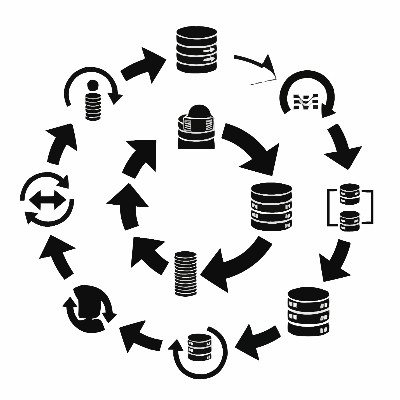
Most business owners treat their office computers like breakroom microwaves: they expect them to work until they physically stop turning on. It’s a logical approach for a toaster, but in the professional world, a computer becomes "old" long before it actually breaks.
With automated threats on the rise and taking over the cyberthreat landscape, you need as many ways to stay safe online as possible. Naturally, one of the most talked about topics is login security. There’s a lot of good password advice out there, but the most helpful piece isn’t repeated often enough: just make it longer.

When the time comes to upgrade any of your business tech, it makes sense that most of your attention would be on maximizing the value you get out of your new hardware. However, it is critical that you also continue to think about your discarded hardware… specifically, the data it contains.
In short, deleting files simply isn’t enough. You need to be confident that any information is truly purged or physically destroyed when you’re replacing your hardware.

In the race to implement generative AI and predictive analytics, most organizations focus on the high-profile tasks: choosing a Large Language Model (LLM), fine-tuning the parameters they need to use, or designing sleek user interfaces. There is a gritty, structural reality that often brings these projects to a grinding halt before they even launch: data silos.

For the modern enterprise, deploying artificial intelligence is less about buying a shiny new engine and more about high-performance fuel. AI thrives on information; if that input is fragmented or disorganized, your investment is essentially trying to navigate a fog with a broken compass.
Mobile? Grab this Article